

22 Oct Emini Day Trading Course Insights for Order-Flow Platform Comparisons
Build a Confident Platform Evaluation Before Q4 Volatility
A trading platform comparison should start with your trading plan, not a flashy feature list. Before late-year earnings, Federal Reserve events, holiday-shortened sessions, and changing volatility, we recommend looking closely at how your tools support the way you actually trade the S&P 500 E-mini futures.
NinjaTrader, Interactive Brokers, and other futures-capable platforms each have different strengths. Some traders care most about charting and order-flow displays. Others need a smooth execution process, account controls, replay tools, or automation options. We treat platform comparisons as education, not endorsements, and recommend confirming each provider’s current data packages, supported connections, margin requirements, and available features before making a decision.
An E-Mini Day Trading Course Should Teach Workflow First
A useful E-mini day trading course should teach more than where to click. We believe traders need a repeatable routine that carries them from premarket preparation through the final review of the session.
That workflow often includes:
- Reviewing overnight movement and important price areas
- Identifying the market context before entering a trade
- Waiting for a defined setup and timing signal
- Managing risk, targets, and exits during the trade
- Reviewing decisions after the market closes
Your platform should fit this routine, not control it. If your plan calls for bracket orders, quick adjustments, custom charts, volume analysis, alerts, replay, and a trading journal, those tools should feel easy to reach when needed. A platform that looks impressive but slows your decisions may not serve your process well.
In our training, we focus on market timing, technical analysis, trade execution, and risk management because these skills shape the quality of a trade. Learning a platform’s buttons is helpful. Learning the judgment required to place and manage an E-mini trade responsibly is the bigger task.
Compare Order-Flow Tools Beyond Brand Claims
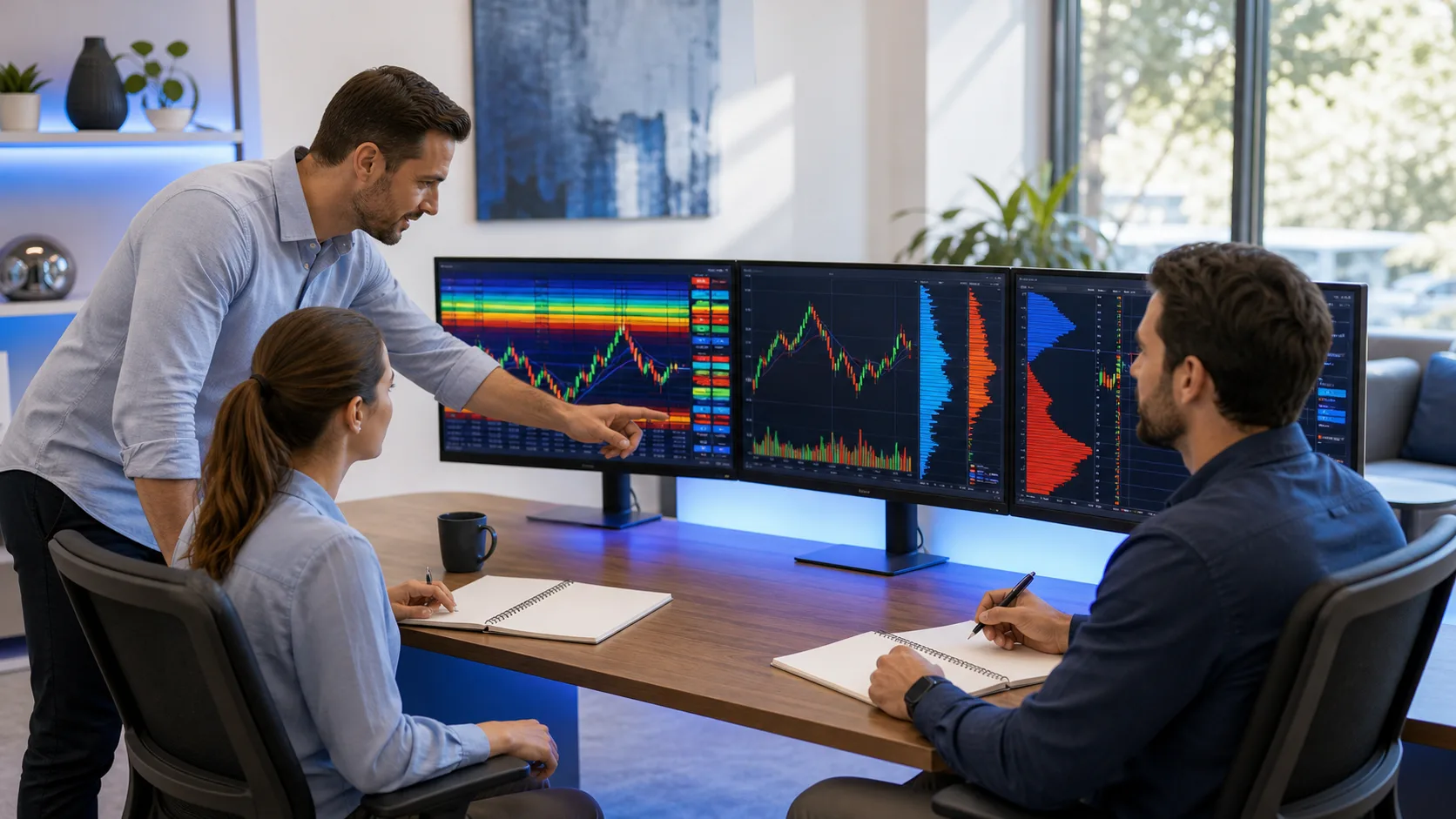
Order-flow tools can give you a closer look at activity inside the market. Still, more data on the screen does not automatically lead to clearer trading decisions. We often see traders add tool after tool, then struggle to tell which information truly matters.
When comparing platforms, look at the order-flow features you may use in your plan:
- Volume profile and volume-at-price data
- Footprint charts or bid-ask charts
- Cumulative delta readings
- Depth-of-market displays and time-and-sales windows
- Session statistics and market replay tools
The better question is not, “Which platform has the most tools?” Instead, ask whether the tools are readable when the market is moving. Can you customize the chart without making it cluttered? Does the platform work with your preferred data connection? Can you replay a session and study what happened around your entry?
Order flow should help confirm or challenge what you already see in market structure. For example, it may help you judge activity near support, resistance, a prior high, or a key intraday level. It should not replace trade location, timing, or a clearly defined risk point. In an E-mini day trading course, we encourage traders to use a small set of meaningful confirmations rather than turning every chart into a wall of signals.
Match Data, Execution, and Risk Controls to Your Plan
Data quality matters when you use order-flow tools. Live and delayed quotes are not the same experience, and data feeds may display market activity differently. Before relying on footprint charts, depth-of-market screens, or time-and-sales data, make sure you understand what your platform and connection provide.
Execution deserves the same attention. Fast conditions can test both your technology and your discipline, especially around major news or sudden moves. We suggest evaluating whether the platform supports the order types and controls that match your trading plan, including stop-loss placement, profit targets, partial exits, hotkeys, order confirmations, and mobile access if that is part of your routine.
Risk tools can help put a guardrail around impulsive decisions. Look for settings that support your own limits, such as:
- Maximum position size controls
- Daily loss limits or alerts
- Bracket-order templates
- Confirmation settings for larger orders
- Warnings that slow down repeated entries
Simulation is a practical place to test your workflow, but it is not the same as live trading. Simulated fills may not reflect real liquidity, pressure, or emotion. That gap is why we place risk management at the center of training for serious late-beginner, intermediate, advanced retail, and institutional-minded traders.
Use an E-Mini Day Trading Course to Test Your Tools
A structured comparison is more useful than switching platforms after seeing a social media screenshot. We recommend defining your trading plan first, then listing the tools that plan requires. From there, test how each platform handles the same setup over a set period, such as the October through December trading season.
Keep your review simple. Track chart readability, speed of order entry, clarity of market data, replay quality, and how well you followed your risk rules. If possible, use the same market conditions, chart layout, and setup criteria during each test. That makes it easier to separate a platform issue from a trading-process issue.
The right platform is rarely the one with every possible feature. It is the one that helps you execute a proven process with fewer distractions. Technology cannot replace market education, sound trade location, proper position sizing, disciplined execution, or an honest review process after the session.
Turn Platform Research Into Better Trading Decisions
Platform research works best when it is part of a broader development plan. Our professional training and mentorship give traders a way to connect platform choices with S&P 500 E-mini futures analysis, market timing, execution, and risk management. Rather than chasing a new tool every time the market feels difficult, we encourage you to identify the specific workflow gap that needs attention.
Before the year-end period becomes more active, choose one area to improve, such as faster order entry, clearer order-flow reading, firmer loss limits, or more consistent trade review. A platform should make disciplined choices easier to carry out, while your plan remains the guide.
How to Master Practical Order-Flow Skills with VTCtraders
Our E-mini day trading course helps traders connect platform features with actionable market-reading techniques and structured trade preparation. At VTC Traders, we focus on education that supports independent decision-making across different tools and market conditions. Have questions about which training approach fits your goals? Contact us to speak with our team.

Sorry, the comment form is closed at this time.